Nordic Employment Law Bulletin - December 2025







In our monthly Nordic Employment Law bulletin our employment lawyers across the Nordic region highlight relevant news and trends on the Nordic employment market scene. The bulletin intends to provide high-level knowledge and insight. Want to learn more? Our experts will be happy to hear from you.
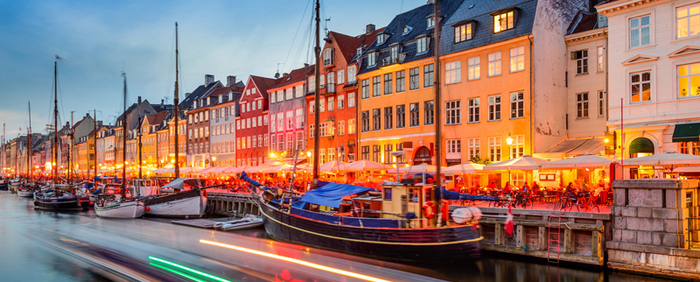
Highlights from Denmark
The Danish Labour Court’s decision on temporary agency workers. On 3 November 2025, the Danish Labour Court handed down a decision which changes the employment terms that temporary employment agencies covered by collective bargaining agreements (“CBA”) must offer their temporary agency workers when they are assigned to a user company. In this case, an employee was employed by a temporary employment agency bound by a CBA. The employee was assigned to a user company who was bound by another CBA. If the employee had been covered by that CBA, the employee would, among other things, have received a higher pension contribution and the right to paid sick leave. The employee’s union subsequently brought the case before the Danish Labour Court, which had to determine whether the employee was entitled to an additional pay and compensation under the Danish Act on Temporary Agency Workers. The Danish Labour Court found that the temporary employment agency’s CBA which was concluded by the most representative labour market parties in Denmark was not sufficient to ensure the general protection of temporary agency workers. Therefore, the principle of equal treatment also applies even if the temporary employment agency itself is covered by a CBA applicable to the work. A comparison must therefore be made between the employment conditions under the temporary employment agency’s CBA and those under the user company’s CBA. If there is or has been a differential treatment, the temporary employment agency must provide the temporary agency worker with compensatory benefits. In this specific case, the employee had not received compensatory benefits and was therefore entitled to an additional payment. However, the employee was not entitled to a compensation as the breach of the principle of equal treatment resulted from EU law and had not been addressed by the legislature or the labour market parties in Denmark.
- The holiday-taking period is coming to an end on 31 December. In Denmark, the holiday year runs from 1 September to 31 August the following year. The holiday-taking period for the holiday year in question runs from 1 September to 31 December the following year. As we approach the end of the holiday period for the 2024/2025 holiday year, employers are encouraged to check how much holiday employees have left. Also, an employee may agree with the employer to carry over any accrued paid holiday in excess of four weeks to be taken in the subsequent holiday-taking period. Such agreement must be entered into in writing on or before 31 December 2025.
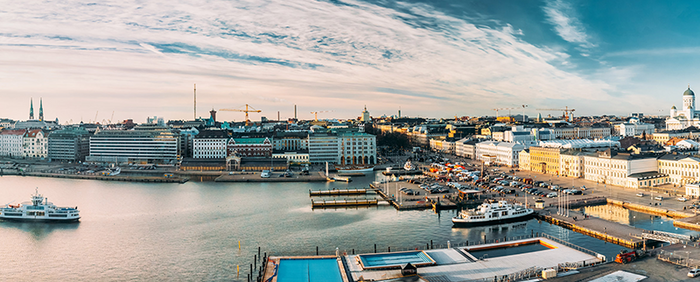
Highlights from Finland
- Delay in implementation of the Pay Transparency Directive – The government proposal to implement the Pay Transparency Directive was expected by the end of this year but the expected date of presentation to Parliament has been postponed once again. Currently the government proposal is expected on week 11 in March 2026 which would leave only three months for employers to prepare as the directive must be implemented by early June. According to the government programme, the directive will be implemented following the minimum requirements of the directive. Therefore, to some extent employers will be able to prepare for the local law already in advance.

Highlights from Norway
New Court of Appeal ruling clarifies the scope of an employer’s duty to provide reasonable adaptation
The Court of Appeal has recently delivered a judgement, published on 30 October, that provides useful clarification of the limits of an employer’s duty to provide individual adaptation under Section 4-6 of the Norwegian Working Environment Act.
The case concerned an employee with back problems who had been declared fully fit for work yet was still unable to carry out all the tasks required in the position. For more than eighteen months, the employer had exempted the employee from heavy manual tasks and used a temporary replacement to cover these duties. Over time, the company assessed that this arrangement was not sustainable, either economically or operationally. The employer had also attempted to identify alternative suitable work, which the employee declined.
The Court of Appeal found that the employer had fulfilled its duty to provide reasonable adaptation. The measures implemented were extensive and long-lasting, and the court emphasized that any further adaptation would require a permanent restructuring of operations and impose an unreasonable burden on colleagues. There was therefore just cause for dismissal under Section 15-7 of the Norwegian Working Environment Act. The court also concluded that shortcomings in follow-up plans, and dialogue meetings were not of such nature to make the dismissal invalid.
The judgment illustrates that an employer’s duty to provide adaptation is not unlimited. When individual adaptation measures become permanent, costly and negatively affect the business, the employer may have just cause to terminate the employment relationship.
The decision can be found (in Norwegian only) HERE.
The Court of Appeal upholds dismissal over anonymous harassment letters
The Court of Appeal, in a judgment delivered on 7 November, has upheld the summary dismissal of an employee who, over several years, sent anonymous letters containing serious and unfounded allegations about a former supervisor. The supervisor in question eventually went on sick leave due to the strain. The court concluded that the letters constituted intentional harassment and a gross breach of the duty of loyalty, making summary dismissal a proportionate response.
The Court of Appeal also noted that the employee had previously received two formal warnings for unacceptable behaviour, which supported a long-standing pattern, although they did not in themselves justify summary dismissal. The process was found to be proper, and the letters did not meet the requirements for lawful whistleblowing.
The minority of the court believed the threshold for summary dismissal had not been met and that a regular termination should have been considered. However, the majority concluded that the employer needed to end the employment relationship immediately. The employee did not succeed in claims for reinstatement, compensation, or damages.
The dissent underlines how high the threshold for summary dismissal remains in Norwegian employment law.
The decision can be found (in Norwegian only) HERE.
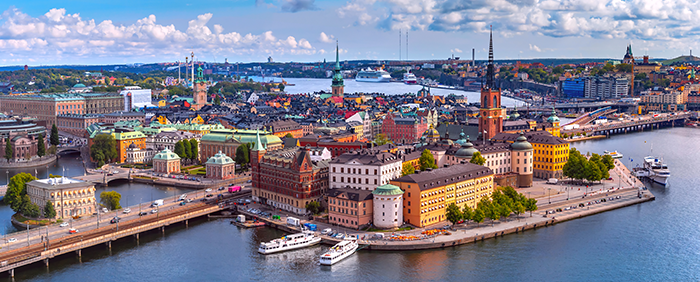
Highlights from Sweden
Social Democrats Push for Crisis Talks on Unemployment — Unemployment remains a pressing issue in Sweden, which is why the Social Democratic Party has urged Prime Minister Ulf Kristersson to convene crisis talks- According to Crisis Sweden, unemployment is now at 8.9%. The party's economic policy spokesperson, Mikael Damberg, described the situation starkly: "Unemployment has hit a new nightmare level".
The Social Democrats argue that the government is passive despite the severity of the situation, contrasting it with the action taken during the pandemic. They propose cross-party talks and measures such as ensuring young unemployed people are offered jobs, training or internships within three months, providing traineeships for recent graduates in the public sector, and expanding practical education programs.
However, the government has rejected the call. Labour Market Minister Johan Britz stated that the priority is to break the economic downturn through tax cuts designed to boost household spending and education leading to employment, whilst criticising what he termed "sluggish Social Democracy".
The Sick Pay Deduction – A Political Hot Potato — The debate over Sweden’s sick pay deduction (Sw: karensavdraget) has flared up again. The Social Democrats want to abolish it, arguing the current system is unfair: blue-collar workers represented by the Swedish Trade Union Confederation (Sw: LO) cannot work from home when ill, unlike many white-collar employees. LO strongly supports the proposal, calling it a long-overdue reform.
On the other side, the Confederation of Swedish Enterprise (Sw: Svenskt Näringsliv) warns of serious consequences. Their estimates suggest the change could cost businesses up to SEK 40 billion annually and lead to higher short-term sick leave. They argue the deduction is essential to discourage unnecessary absences and maintain productivity.
Although the proposal was recently voted down, several parties continue to push for its removal. The issue remains a political flashpoint, highlighting the sharp divide between LO and Svenskt Näringsliv. For now, the sick pay deduction stays – but the fight over its future is far from over.
Midnight Means Lights Out: Court Ends Night Work — For our loyal readers of the Nordic Employment Law Bulletin, you may recall that in May we reported on “curtains down” for strip clubs’ night work. Well, the saga continues – and this time, the spotlight is on another strip club being hit with a ban on night work with fines exceeding SEK 4.5 million (approximately EUR 410,000) for breaching the Working Hours Act.
Adding to the drama, the court confirmed that the Union for Stage and Cultural Workers ("Sokaf") – the union at the heart of the controversy, which in the May issue was reported to be a newly formed union too small to qualify as a central organisation – still does not qualify as a central workers' organisation.
In short: when the clock strikes midnight, the show really is over.


